Podcasting has become overwhelmingly successful as a result of many technological changes and the innate need for people to have accessible information at all times. However, this information isn’t just what you would hear nightly on the news. This information becomes more intimate as a result of hearing someone’s voice and their tone, ultimately making the experience more realistic.
Check out the link below for more reasons why podcasting is becoming the way of the future
Another pro of podcasting is that it is very easily accessible. People have become very used to be able to have everything they need at the tips of their finger tips- primarily, on their cellular device. Podcasting is no exception to that desire. Podcasts can be accessed via a website, downloaded or on RSS. This being said, this is the only online platform that can be accessed in an indirect manner. Whether you are driving a car, shopping at your local mall or cooking dinner for your family, you can simultaneously be listening to someone’s voice or opinion via podcast. It is the perfect platform if you have a tendency to multitask.
Clearly, podcasting is a means to connect with a given audience. However, it is also a great way to connect with online influencers. Proving that you have a podcast is an immediate way of showing that you have something to share with others. People are naturally drawn to those who have something interesting to say or a moving story to tell. Podcasting gives you an instant audience, regardless of how famous or busy this given person is. Overall, podcasting is a great way to gain exposure.
The most desirable aspect of podcasting, besides its accessibility, is the ability to set your own personal stage. There are no rules regarding what can be covered in a podcast. Your podcast is your space to speak freely on controversial topics or comment about social norms. Your podcast is your space. Whether people follow it or not is a whole other argument but my simply recording your thoughts, you open yourself up to a wider audience on your own terms.
With this in my, I took it upon myself to make a quick podcast of my own to understand what it has been like for students who are also studying abroad in Barcelona, Spain. Check out my podcast below for an American’s perspective on cultural differences and the importance of social media while exploring the world.
After our class conversation with Marta and my time spent abroad, I have set a new goal for myself that combines my passion for helping others, traveling the world and experiencing the Public Relations field. I would love to start working for a nonprofit organization somewhere in Europe or Africa. I have come to understand that working in nonprofit PR might be unconventional so I did some research and here is what I found.
Both profit earning and nonprofit sectors understand public relations to be the establishment and maintenance of an organization’s relationship with the publics on which it relies on. In the case of nonprofit public relations, the organization gears its marketing strategies towards the cause that they support rather than a specific customer, product or ideology. Public relations in general is a tough industry to manage as organizations are constantly trying to meet the expectations of the public as well as build a strong sense of communication with a target audience. However, for nonprofit organizations, it is increasingly more difficult as their primary goal is to raise funds to support a given cause rather than to increase popularity or product sales. Public relations are vital to the success of a nonprofit organization as it serves as a means to gain awareness.
From a public relations perspective, nonprofits are often represented as fostering goodwill and serve as beacons of social responsibility. For this idea to remain constant, nonprofits follow a few foundational elements to ensure their success. In most cases, there is little time to promote the organization’s good work. To make this easier, most nonprofits- like for-profits- utilize online media rooms, an organizational backgrounder, biographies, fact sheets and media lists to maintain communication with the target audience and make sure that their stories are be leaked to and published in the right sources. An online media room is a dedicated space for a website. This serves as a way to show the media that the organization respects the needs of the public. An organization backgrounder is a way to convey stories to reporters in an easy and engaging way. Rather than focusing on a call to action, organizations strive to get key facts regarding their work out in the community. With any sort of organization, it is crucial to know the biographies of those holding leadership positions as it gives more credibility to the reputation of the organization. The fact sheet gives reporters a way to understand the work of the nonprofit and why it is important. Most nonprofits have more than one fact sheet to detail an array of issues and or goals. Finally, nonprofits utilize a media list so that they stay connected to the right reporters which will ultimately help prioritize and focus their communication efforts.
While the industry requires a wide variety of skills in order to successfully market the organization on a public front, there are five essential requirements each nonprofit public relations specialist must have. This being said, all of these requirements parallel those needed for any sector of public relations. The five requirements are great communication skills, a developed writing ability, confident understanding of social media, ability to maneuver multimedia and a strong sense of creativity. These five skills allow specialists to successfully develop tactics and respond to the needs and responses of the public.
In the most general sense, the goals and requirements for any nonprofit include the following: working towards the mission, firming up donor bases, recruiting and managing volunteers, and reporting to a governing board. In most cases, nonprofits focus on quality over quantity which explains the overarching theme of fundraising. There are two main target audiences that nonprofit organizations appeal to. One is composed of those on the receiving end of the nonprofits work. The other are the people and institutions providing the money and other forms of support. This being said, nonprofits are primarily concerned with fundraising to keep costs as low as possible so that they can effectively carry out their mission.
Fundraising is a critical challenge for most nonprofit organizations that is not necessarily highlighted for other sectors of public relations. Public relations specialists often zoom in on this factor and conduct solicitation programs as it is a driving force behind the organization’s success. There are different fundraising tactics used depending on the campaign. Methods include but are not limited to direct mail, structured capital campaigns, event sponsorship, social media etc. Considering the fact that nonprofits are seen as the “good guys”, people are often motivated to give money. Understanding what motivates people to give money or volunteer is important to any individual that is working in the fundraising department of nonprofit public relations. More often than not, people give for two reasons. One, there is an inherent generosity possessed in some degree by almost all people. Two, it serves as an ego satisfaction for people.
Within the nonprofit sector of public relations, there are three primary areas that practitioners often focus on. Those three are internal communications, external communications and measuring success. Internal communications consist of strong communication with employees. All employees must be on the same page in terms of analyzing and understanding an organization’s mission and everyone in the organization must be aware of what is going on in all departments. Once this is established, the organization may focus on external communications. Having strong external communications will determine what your audience thinks of the organization. For this to happen, you must understand what the audience wants. In order to successfully adhere to an audience, organizations conduct research and speak to members of the community to get to know them on a local and intimate level. Once internal and external communication is established, the company measures its success. This serves as a way to know whether or not they are reaching the goals and objectives of all communication. Organizations go back to employees and audiences to ensure that the future of the organization is on track.
Similarly, to for-profit organizations, nonprofits utilize an array of tactics to ensure the success of their public relations campaigns. According to Elizabeth Chung, these tactics include targeting the right audience, using compelling visuals to stand out, crowdsourcing content with user-submitted videos, starting a “pay it forward” campaign and riding the trend. While these may be unconventional, these tactics are a good way to get to know the audience on a more personal level and make them feel as though they are engaged in the cause. Nonprofits primarily rely on volunteers and fundraising to stay afloat. These alternative and specific tactics are just a few ways to draw in a crowd that is willing to engage in the organization’s work. Other helpful tactics include identifying a spokesperson and mapping out all communications activity. One of the dominant advantages of a nonprofit organization over for-profit competitors is their inherent credibility. This being said, nonprofits are constantly looking to build bridges with new audiences, widen their influences and enhance their reputations. By sending out their messages via popular vehicles and focusing on media relations and placement, these organizations reach a wide variety of people. Media is the greatest influencer in framing a reputation, therefore, it is extremely important that nonprofit organizations encourage people to consider social issues via media.
While the nonprofit sector of public relations has its inherent perks, there are definitely pros and cons that can sway one’s opinion of this field. Pros of this section of the industry include: unparalleled growth opportunity, the fact that employees can shift their skill set quickly, there are more connections to be made, nonprofits value business skills, they focus on fulfilling works, and its employees are eclectic and bright. However, on the contrary, there are cons that make this field fundamentally more difficult. The cons of this field include: concrete results or check-in points may be difficult to spot as there isn’t necessarily a finite goal, the work environment can be frustrating, the level of burnout can be high, stakes are higher, there is a constant focus on fundraising and most identifiable for most people- the salary is not ideal considering the amount of time that goes into creating and managing a campaign.
However, as the industry changes, the pros and cons of the nonprofit sector of public relations might fluctuate. There are potential factors that could affect the future of this industry. For instance, there might be an increased investigation into political giving or there could be an increased need for social media depending on their fluctuating nature. According to Bill Tedesco, going forward, nonprofits can do one of three things. First, they could coast along with the status quo and rely on commercial support. Second, they could ditch the traditional constructs of the sector in favor of a social enterprise. Third, the sector could use the challenges they face and view them as an opportunity to reevaluate how the sector functions.
While there is an array of factors that contribute to the success or failure of a nonprofit’s public relations endeavors, there are three campaigns that give hope for future nonprofit’s and their campaigns. The first is the photo speaks for itself campaign done by UNICEF. The ultimate takeaway from this campaign is to not be afraid of being bold. The seconds is the #FirstWorldProblems video completed by Water is Life. They changed the conversation via social media and ultimately provided over a million days’ worth of clean water to those in need. The third is the ALS Associations’ Ice Bucket Challenge campaign. It started as a simple awareness video and flourished into an international sensation. As a result of this campaign, it is evident that people like to be seen doing something that matters.
Tourist vs. local- the debate that determines what cultural experience you will indulge in while traveling. Traveling can be defined as driving down the coast of Florida in your own car or flying across the world to see Australia’s Great Barrier Reef. No matter where the destination might be, travelers are required to figure out and plan a few crucial things. At the beginning of a trip, travelers might ask themselves where they are going to eat, what sights are they going to see or where they are going to stay. But, when it comes to Barcelona and the city’s innate sense of night life, travelers are faced with another question- where to go out at night.
Before diving into the important role that nightlife plays in having a well-rounded experience in Barcelona, it is impossible to ignore the other tourist attractions that thousands of people fly to Barcelona for every year. Barcelona, Spain has attracted tourists for years because of how beautiful the city is- physically, historically and culturally.
“I have come to Barcelona many times and every time has been absolutely perfect. The city has so much to offer and I don’t ever get bored. I love exploring the city because I find something new every time I visit,” said Alexandra Tamames
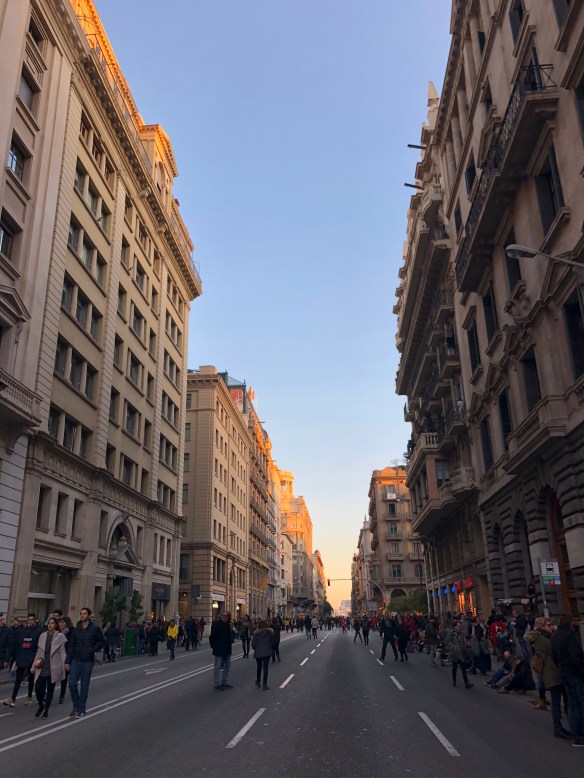
First of all, Barcelona itself is divided up into neighborhoods- all of which having a different cultural flare. Some of the more popular regions are the Gothic Quarter, Eixample and El Borne. Gothic Quarter attracts those who are interested in an old town vibe and is home to many narrow roads to explore. Eixample is a more modernized neighborhood, known for its architecture and busy roads. El Born is famously home to Las Ramblas- the most popular drag in Barcelona- and is often known as the heart and soul of the city. While these are the most popular areas, there is no harm in exploring areas that are off the beaten path such as Port Olimpic- an area swarmed with many local bars and restaurants.
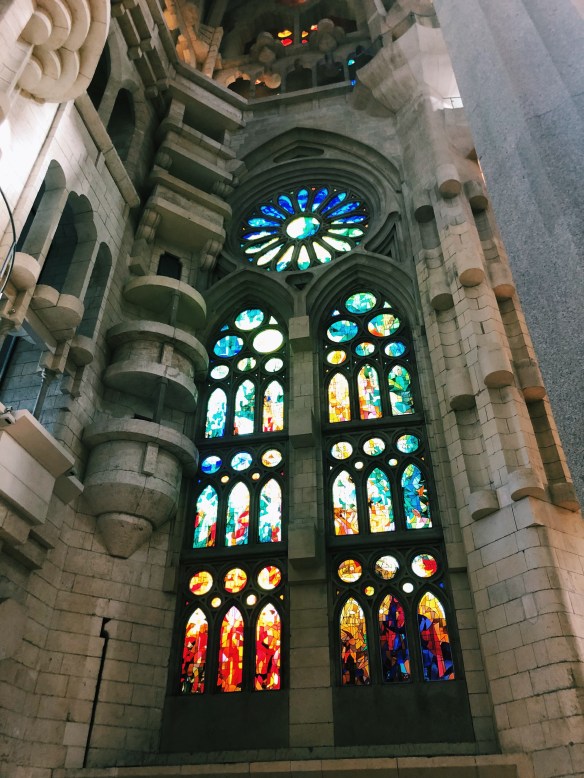
Second, in terms of architecture, Barcelona is home to Antoni Gaudi’s finest works, for example, Park Guell, Sagrada Familia and Casa Batlo. The architecture alone makes the city naturally beautiful and tourists are encouraged to visit every architectural sight possible- and there are many! These architectural landmarks, all rooted in history, host thousands of tourists every year. Going to Barcelona and not seeing the Sagrada Familia is like going to Paris and not seeing the Eiffel Tower- some things just can’t be missed regardless of what experience you are trying to have while traveling. However, there are more architectural attractions that make the city beautiful than those you would find on the front of a brochure. Travelers looking for a more local experience can simply walk through the small cobblestone streets and discover the natural magnificence of apartment buildings, sculptures, fountains etc. Just walking around and exploring is a great way to stumble upon some of the city’s most beautiful destinations, all of which make the city perfectly gothic yet modern.
“I recently had my parents come and visit me. They are normally very interested in seeing the biggest tourist attractions so obviously we did that, but they ended up being the most impressed by this little statue we randomly found in Gracia. I think that is the beauty of Barcelona. You can find the most beautiful things even when you are not looking,” said Blake Small.
Third, you can’t go to Barcelona and not indulge in tapas and paella, two of Barcelona’s most prized possessions. Tapas are a Spanish delicacy served in smalls portions for all to enjoy. Tapas are simply the perfect meal regardless of how hungry you are- there is no shame in ordering one dish or eight dishes. Barcelona is loaded with tapas restaurants that attract both locals and visitors. Paella on the other hand requires a more developed pallet. However, if you are willing to enjoy the taste of the water, you can’t miss Barcelona’s paella. It is the perfect meal to taste the Mediterranean. Like with most places, there are famous restaurants when it comes to a country’s delicacies. For example, if you are looking for the world’s best paella, visit Siete Portes. However, there is no harm in wandering the streets and finding a whole in the wall because more often than not, these places are the most underrated and can deliver the best meal you have had in your life.
Finally, you can’t discuss Barcelona’s culture without tackling the subject of nightlife. Like with the overall concept of traveling, going out in Barcelona can be divided up into two sectors- the tourist experience and the local experience.
First off, the touristy places. These places are basically designated for students studying abroad and those who are looking to have a very Americanized experience while partying until the early morning hours. The strip on the beach is the perfect place to find fellow Americans. Places like Opium, Shoko and Pacha are loaded with college aged students who are indulging in the same sort of clubs that they do back home.
“I prefer places like this just because I feel more comfortable. As an American that doesn’t speak Spanish, I feel uncomfortable going to a local bar. A club like Opium is what I am used to and that’s the same with a lot of people I know in Barcelona so I think that is why so many people go,” said Blake Small.
Secondly, the local spots. There are a select group of American tourists willing to explore the hidden gems. Most tourists avoid these spots but these places will ensure a more local experience due to the atmosphere, different drink recipes, the music played etc. This local vibe can be found at places like Apollo or L’Ovella Negra on the weekends- a time when most students studying abroad are traveling.
Barcelona is packed with culture and tourists certainly take advantage of that. However, it is how you take advantage of it that makes the experience worthwhile. Are you going to be one of thousands or are you going have your own experience?
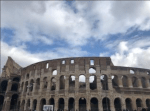
Ciao da Roma! Historic and modern combine forces to create an architectural and culturally beautiful environment in Rome, Italy! You can’t visit Rome and not see one of the seven wonders of the world, the Colosseum.
To check out some more information about the Colosseum, click on the link below.








 Living with Liv